Ever wish your students were more motivated? If you’re like most of us, you have tried an array of rewards and punishments to motivate kids. There’s only one problem: it doesn’t work. At least it doesn't work well enough. People (yes, even students) aren’t motivated from the outside so rewards and punishments only work to a point. We are internally motivated. That’s why it's essential to engage and inspire students to be motivated to succeed in school (and life.)

If you’re ready to move beyond the reward/punishment model and embrace a whole new way to understand motivation, I encourage you to come back regularly. It’s time to challenge the status quo and create schools and classrooms based on what really motivates behavior.


Tuesday, August 27, 2013

Managing Your Child's "Expanding" Vocabulary


I recently received this question from a parent:

My son is 14 years old and he just began learning cuss words. I understand that he may be trying to verbally release anger and stress but isn’t 14 a bit too young to be cursing? I firmly tell him that he shouldn’t use such words but I can’t seem to get through to him. What can I do to help him stop cursing?

There’s no single reason why youngsters choose to use profanity. It may be an attempt to act “grown up,” especially if adults in the home use profanity. It may be a way to appear “cool,” particularly if their friends use profanity. It may be a way to test limits and discover boundaries. It may simply be a reflection of contemporary society.

I am uncomfortable advising any parent about what they should be regarding their child’s use of profanity. Each parent needs to establish what is acceptable in their home. My wife and I never had a big problem with profanity. We simply told our three kids, “We don’t use that kind of language in this house.” There were no big discussions. No family meetings. No punishment. As parents, we identified the expectation and moved on. Equally importantly, neither my wife nor I used profanity around our kids. (Telling your kids to “Do what I say, not what I do” just doesn’t work. It’s essential to model the behavior you want from your children.)

Part of parenting is helping kids learn that we act and speak differently in various situations. How I act and speak when I’m conducting a workshop for parents or teachers is different from how I act and speak when out to dinner with friends or on vacation with my family. Kids are well served when they learn that some behavior and language may be acceptable in one situation and inappropriate in another context. My wife and I made it clear to our kids that profanity wasn’t appropriate in our home. That worked for us, but each parent needs to establish the expectations for their own family.

***


As always, if you enjoyed this and found it useful, please send the link to your friends. Thanks.

Bob Sullo

For information about books by Bob Sullo and to schedule a keynote, workshop, or series for your school, agency, or parent group visit www.internalmotivation.net

Friday, August 16, 2013

A Question For Teachers: "What Do You Want?"


As schools across America prepare to begin a new academic year, teachers face expectations from various sources, including parents, building leaders, department heads, and central office. With most states opting into the  the Common Core State Standards Initiative, yet another set of expectations is in play. It’s all part of today’s educational landscape.

The problem with these expectations - perhaps “limitation” is a more accurate word - is that they are external. There’s not necessarily anything wrong with them, but people are ultimately motivated from the inside. The expectations of others and externally imposed standards only take us so far. To reach the highest level of achievement, professionalism, and motivation, we need to develop internal expectations and standards.

I invite every educator to create their own expectations for the coming year, using WDEP, a model developed by Bob Wubbolding, Senior Faculty member of The William Glasser Institute.

W: Want. It’s obvious what others want and expect from you this school year. Beyond that, what do you want for yourself and from yourself? Is it that more students achieve at a higher level? Is it to nurture more collaborative relationships with parents? To cut down on the number of disciplinary infractions in the classroom? To infuse more technology into your teaching? To begin or complete an advanced degree? The list of potential “wants” is endless. Identify a few that really matter to you. Aside from all the externally imposed - and very important - expectations, what do you want for and from yourself this school year?

D: Doing. One of the core principles of Choice Theory is that all behavior is purposeful. We behave in an effort to achieve what we want. Once you have identified what you want, determine what you need to do to turn your goal(s) into reality. Having a clearly identified want is necessary, but not sufficient. Life doesn’t simply happen to us. If you want something, you need to develop clarity about what you need to do to achieve it.

E: Evaluation. How will you know if you have achieved what you want (or are heading in the right direction)? Some goals are more easily evaluated. If you have a goal of making  contact with the family of each student, you can objectively track your progress. Some goals are less tangible. Suppose, for example, you want to enjoy even better relationships with your professional colleagues. How will you measure it? What criteria will inform you of your progress so you can effectively self-evaluate. Ongoing self-evaluation helps you maintain what’s working or change your actions to become more effective.

P: Plan. Words, theory, and ideas are nice, but don’t mean much unless they are put into action. With a new school year about to begin, what’s your specific plan of action to become more like the educator you’d like to be? When will you begin? If you don’t commit to a specific plan, are you likely to have the kind of professional experience you want for yourself this year? How badly do you want what you say you want? Enough to think about it? Talk about it? Do it? Creating and implementing an action plan will help you experience the success you want for yourself.

Lots of people in various roles will expect things from you this school year. As a teacher, you’ll identify expectations for your students. That’s the way it works. I encourage you to go beyond the experience of external expectations this year and identify your own set of internally generated expectations.

Note: You can read more about this topic in Chapter 14 (“Create Your Professional Identity”) of The Motivated Student: Unlocking the Enthusiasm for Learning.

***
As always, if you enjoyed this and found it useful, please send the link to your friends. Thanks.

Bob Sullo

For information about books by Bob Sullo and to schedule a keynote, workshop, or series for your school, agency, or parent group visit www.internalmotivation.net


Friday, August 9, 2013

"My Daughter Can Be A Bit Of A Bully:" Part 2


Here are some additional thoughts after I received the following question from a parent.

My daughter can be a bit of a bully at times. When she plays games with friends if she doesn't get her way, she gets real bossy. I can tell from her friends' faces that this really annoys them. I can't get my daughter to change her behavior and want to help her before she loses these friends. Suggestions?

When your child is behaving in an unacceptable way – even doing something as distasteful as bossing or bullying  - it helps to remember that everybody is doing the best they can at that moment to meet their needs. It may be difficult to believe, but your child doesn’t know a better way to get what they want. As clumsy, awkward, or inappropriate as they may be, what you see represents their best shot at that moment. Part of our job as parents is to help our kids develop better, more elegant, responsible ways to meet their needs. Rather than choosing to be upset and frustrated by our children’s unwanted behavior, we can say to ourselves, “This is the best they can do right now. They don’t know any better. It’s not OK and I won’t sanction this behavior. My job as a parent is to help my kids develop the resources to meet their needs responsibly.” When parents remind themselves that their kids are works in progress - not just “being bad” -  they are better able to teach and guide them, even when kids display inappropriate – but very typical – behavior.

It would be nice if our kids always behaved exactly as we’d like, but that’s not the way it works. How parents choose to deal with the expected bumps along the way will play a significant role in how things play out. When your children struggles, use it as an opportunity to teach them a better way to get what they want. That’s one essential quality of an effective parent. 

Note: This was originally published by Funderstanding. Their newsletter is free and includes interesting, useful ideas for both educators and parents. I encourage you to subscribe.

As always, if you enjoyed this and found it useful, please send the link to your friends. Thanks.

Bob Sullo

For information about books by Bob Sullo and to schedule a keynote, workshop, or series for your school, agency, or parent group visit www.internalmotivation.net

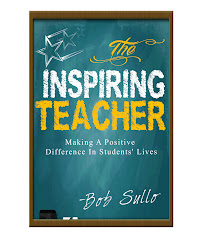
Don't forget to get your copy of the revised edition of The Inspiring Teacher: Making A Positive Difference In Students' Lives.

Sunday, July 28, 2013

"My Daughter Can Be A Bit Of A Bully. Any Suggestions?"


A parent recently sent me the following: "My daughter can be a bit of a bully at times. When she plays games with friends if she doesn't get her way, she gets real bossy. I can tell from her friends' faces that this really annoys them. I can't get my daughter to change her behavior and want to help her before she loses these friends. Suggestions?"

Parents who observe their kids being bossy or bullying understandably become frustrated. “There’s absolutely no reason for them to behave like that!” they’ll say to me. My first reminder to parents is that all behavior – even unattractive behavior like bossing and bullying – is purposeful. While it’s not the behavior you want to see from your child, they are acting that way for a reason. Typically it’s connected to the universal need for power or freedom. Kids who boss or bully often gain a measure of power and control, at least temporarily. If you’re faced with this situation, determine some other, more appropriate ways your child can meet the needs for power and freedom. For example, yet can let them decide which one of three activities you’ll do together as a family this weekend. Or which one of three meals you’ll have for dinner. Or whether to do their homework before dinner or after dinner. If you’re really adventurous, you might even let them control the clicker when you watch television together! What’s important is that your child feels that sometimes they get to be the boss. When kids meet their needs for power and freedom by doing things that you sanction, they’ll be less driven to satisfy those needs through inappropriate behaviors like bossing and bullying. Just as kids who are given one or two cookies after dinner are less likely to gorge themselves on the whole box when no one is looking, kids who regularly satisfy the needs for power and freedom responsibly and respectfully are less likely to resort to bossing and bullying.

Note: This was originally published by Funderstanding. Their newsletter is free and includes interesting, useful ideas for both educators and parents. I encourage you to subscribe.

As always, if you enjoyed this and found it useful, please send the link to your friends. Thanks.

Bob Sullo

For information about books by Bob Sullo and to schedule a keynote, workshop, or series for your school, agency, or parent group visit www.internalmotivation.net
Don't forget to get your copy of the revised edition of The Inspiring Teacher: Making A Positive Difference In Students' Lives.

Monday, July 8, 2013

"What's So Wrong With Rewards?"


I recently received the following question: "I've read enough about Choice Theory to know I shouldn't use rewards in my home or classroom. But I've used them and they really seem to work. What’s so wrong with rewards?"

Here's what I answered: Rewards promote compliance, not responsibility. Adults like to talk about kids and their behavior, but let’s forget about the kids for a moment and consider what we want as parents and teachers. Rewards may entice kids into compliance, but there’s no evidence that they help kids internalize values and  promote self-control.  Consider these words from EJ Sobo, a professor at San Diego State University: “Children cultivated toward dependence on external praise through constant positive stroking are at risk for growing into poorly-adjusted adults who must always look to others for approval. They never have a chance to develop their own internal resources.” If you’re like me, you want kids to develop responsibility and be self-directed. Providing external rewards only distance us from what we say we want as parents and teachers.

If you’re satisfied with a quick fix and enjoy living from mini-crisis to mini-crisis, then rewards will work just fine. On the other hand, if you want to promote responsibility and self-control, it’s time to abandon the quick fix offered by rewards. Yes, it will take more time. It will force you to move from autopilot to genuinely engaging with kids. But if you have the will to stick with it, you’ll be a more effective and satisfied parent or teacher.

Note: This was originally published by Funderstanding. Their newsletter is free and includes interesting, useful ideas for both educators and parents. I encourage you to subscribe.

***
As always, if you enjoyed this and found it useful, please send the link to your friends. Thanks.

Bob Sullo

For information about books by Bob Sullo and to schedule a keynote, workshop, or series for your school, agency, or parent group visit www.internalmotivation.net

Don't forget to get your copy of the revised edition of The Inspiring Teacher: Making A Positive Difference In Students' Lives.


Sunday, June 9, 2013

"Homework Is A Constant Fight. What Can I Do Better?"


A parent from New Jersey recently asked, "Bob, homework is a constant fight with me and my 12-year old. She spends more time complaining and screaming than doing the homework. I keep telling her she needs good grades and she should be doing better. What can I do better?"

Here's what I answered: "First, rest assured that your story is typical. Homework struggles are the norm, especially when kids approach adolescence. More than anything, they want to assert their independence and fiercely resist control, even if they intuitively understand it’s “for their own good.” Rather than telling your daughter she needs good grades, needs to do better, etc - all logical comments, by the way – I suggest asking her what she wants for herself. What kind of future does she want? Does she want to be a success? Will doing well in school help her get what she wants? Will completing homework – even if it’s tedious and boring – help her achieve her goals? Don’t be surprised if she rolls her eyes and says, “Whatever,” boredom punctuating her terse comment. That’s typical. Resist the temptation to lecture her about her disrespectful attitude, a new offense compounding her failure to approach homework with joy, enthusiasm, and a song in her heart!

"Despite the rolled eyes and dismissive “whatever,” kids want to be successful. By inviting your daughter to explore how doing homework allows her to more easily get what she wants, you minimize the power struggle, arguing, and stress you are both experiencing. Most importantly, make sure to maintain a positive relationship with your daughter."

Note: This was originally published by Funderstanding. The newsletter is free and includes interesting, useful ideas for both educators and parents. I encourage you to subscribe.

***
As always, if you enjoyed this and found it useful, please send the link to your friends. Thanks.

Bob Sullo

For information about books by Bob Sullo and to schedule a keynote, workshop, or series for your school, agency, or parent group visit www.internalmotivation.net

Don't forget to get your copy of the revised edition of The Inspiring Teacher: Making A Positive Difference In Students' Lives.

Monday, May 20, 2013

Walking the Talk: The Inspiring Teacher FREE from May 21-23!


The Inspiring Teacher is available for FREE from May 21-23. No catch. No gimmicks. Not a sample chapter. The complete book. For free. Not a loan. Yours to keep. For free.

After you read and download your free copy, I’d appreciate it if you’d write a review and post it on Amazon. It doesn’t need to be long. If it’s an honest, heartfelt endorsement, it will be much appreciated. Of course, you don’t need to write a review. You still get the book. No strings. No “if…then.” But reviews lead to more exposure and help get these ideas to a wider audience.

I wrote the e-book version of The Inspiring Teacher because I wanted to reach as wide an audience as possible. An electronic format made it easy to keep costs low. I asked my publisher, Funderstanding, to offer the book at a reasonable price. Of course, I want to get a huge royalty check, but my primary objective is to get the book into the hands of as many educators and parents as possible.

A few weeks ago, Eric Cohen, the “principal” of Funderstanding asked me if I was serious about getting the book out to as many as possible – even if it meant making less money.

“What are suggesting?” I asked.

“Why don’t we just give the book away,” he answered.

“You mean like an excerpt? Some kind of teaser?” I asked.

“No. I mean let’s just give it away,” Eric answered in his usual unflappable way, seemingly oblivious to the fact that what he was suggesting seemed extreme.

“ But…you’re a businessman. How can you turn a profit if we just give it away?”

“That’s right,” Eric said. “I am a businessman. You say you want to help lead the world with Choice Theory. So let’s make it easy for everyone to learn about it. In this case, ‘easy’ means ‘free.’ And, as for profit, I’m not worried. We’ve put together a quality product. These ideas make sense. We just need to get it out there. Giving it away will only increase awareness of Choice Theory and all the things you believe in and write about. Let’s just concentrate on how to get the book in front of as many people as we can. The profit will follow. You just have to trust me.”

Thanks to Eric, I have been given an opportunity to get what I want: reaching as wide an audience as possible and informing more educators and parents about Choice Theory and other compatible concepts designed to make school a more satisfying experience for kids and adults.

I continually say that we are motivated from within and people don’t work just for money. By offering The Inspiring Teacher for free from May 21-23 I’m walking the talk.

I hope you’ll get your free copy during this promotional period and will share this with your friends and colleagues.

Together, we can make school a better place for kids, educators, and parents!

***

For information about books by Bob Sullo and to schedule a keynote, workshop, or series for your school, agency, or parent group visit www.internalmotivation.net

Don't forget to get your copy of the revised edition of The Inspiring Teacher: Making A Positive Difference In Students' Lives.